You call it efficiency.
The compressed timelines and faster decisions supported by AI-assisted outputs are now helping you get more done before 9am than you once managed in a day.
And itfeelsefficient. I'm living proof of that as someone who is now studying a Masters in Psychology full-time this year, whilst running a business. AI has helped me do things I simply could not have done before under this load.
But I've noticed a shift.
The way I reach for a word that used to come easily... and it comes up empty. The way a thought I had five minutes ago dissolves before I can grab a pen. For a while now, I blamed a full schedule. I blamed hormones. Like a lot of the women I work with, I leaned on a lot of convenient labels for something that might actually have a very different cause.
Emergent research is pointing somewhere else entirely.
We are outsourcing our thinking to AI at a scale and pace that early evidence suggests is changing how our brains function. And in the context of leadership, where the quality of human judgment is the most valuable asset an organisation holds, the implications of that shift deserve our full attention and now!
What we've been calling efficiency, the research is beginning to call AI cognitive offloading. And the distinction matters more than most of us realise.
Organisational decisions are moving at an unprecedented pace. AI accelerates decisions, boards reward agility, and the suggestion that we slow down is often met with a fear that we simply cannot keep up. So, we keep moving. We say yes to compressed timelines. We make calls without sufficient context because there is no time to gather it.
But the harder question to sit with is this: what is this pace actually doing to our collective intelligence?
The research on the implications of AI cognitive offloading, the practice of outsourcing our thinking to AI at scale, is uncharted and emergent territory. Whilst it’s early days, the findings are concerning enough to warrant a deliberate rethink of how we are working.
Studies show that high dependency on AI tools correlates with a 17.3% reduction in critical thinking capacity and 22% fewer concepts retained in long-term memory (Gerlich, 2025; Haynes & Ackermann, 2026). Researchers have identified the rise of what they call "Digital Amnesia" the tendency to remember where to find information rather than retaining the information itself, alongside "Solution Paralysis," a state in which people feel genuinely unable to solve a problem without a digital prompt (Gerlich, 2025; Ocklenburg, 2026).
The pressure to upskill in AI quickly as a leader to drive organisational innovation and profits means that many are using AI as a shortcut around thinking, rather than as a tool to think better. Which in turn means the outputs generated as a result often appear coherent on the surface, but hollow underneath. Thus, the rise in what researchers are beginning to call AI Slop: content and decisions that lack the nuance, context, and judgment that only a human mind can provide (Haynes & Ackermann, 2026).

The infographic above draws from the latest research on cognitive offloading and AI dependency, and offers practical strategies for protecting your cognitive capacity while continuing to draw on the genuine benefits of AI.
Our brains are like muscles. When we stop working them through the productive discomfort of complex, unaided problem-solving, we create cognitive atrophy, the mental capacity that once felt natural becomes less accessible and less reliable (Buçinca et al., 2021; Rohilla, 2025).
The good news is that we can take back control of our brain power.
Research on what cognitive scientists call "Cognitive Forcing Functions", deliberate practices that require us to engage analytically before seeking AI input, shows that they meaningfully reduce overreliance and rebuild independent thinking capacity (Buçinca et al., 2021). Introducing a simple practice like attempting to solve the problem or structure the thought yourself first, even for sixty seconds, before reaching out to prompt AI can make a difference. The constraint itself is the intervention.
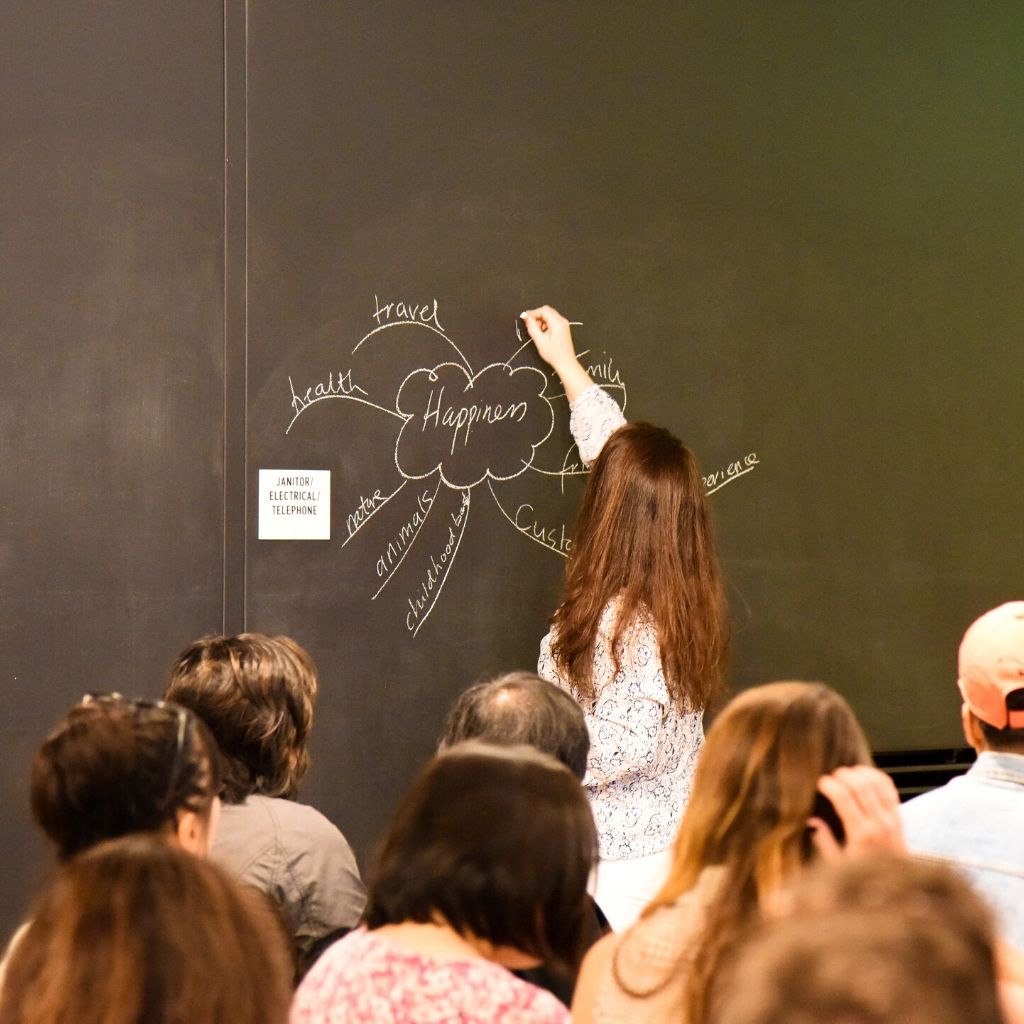
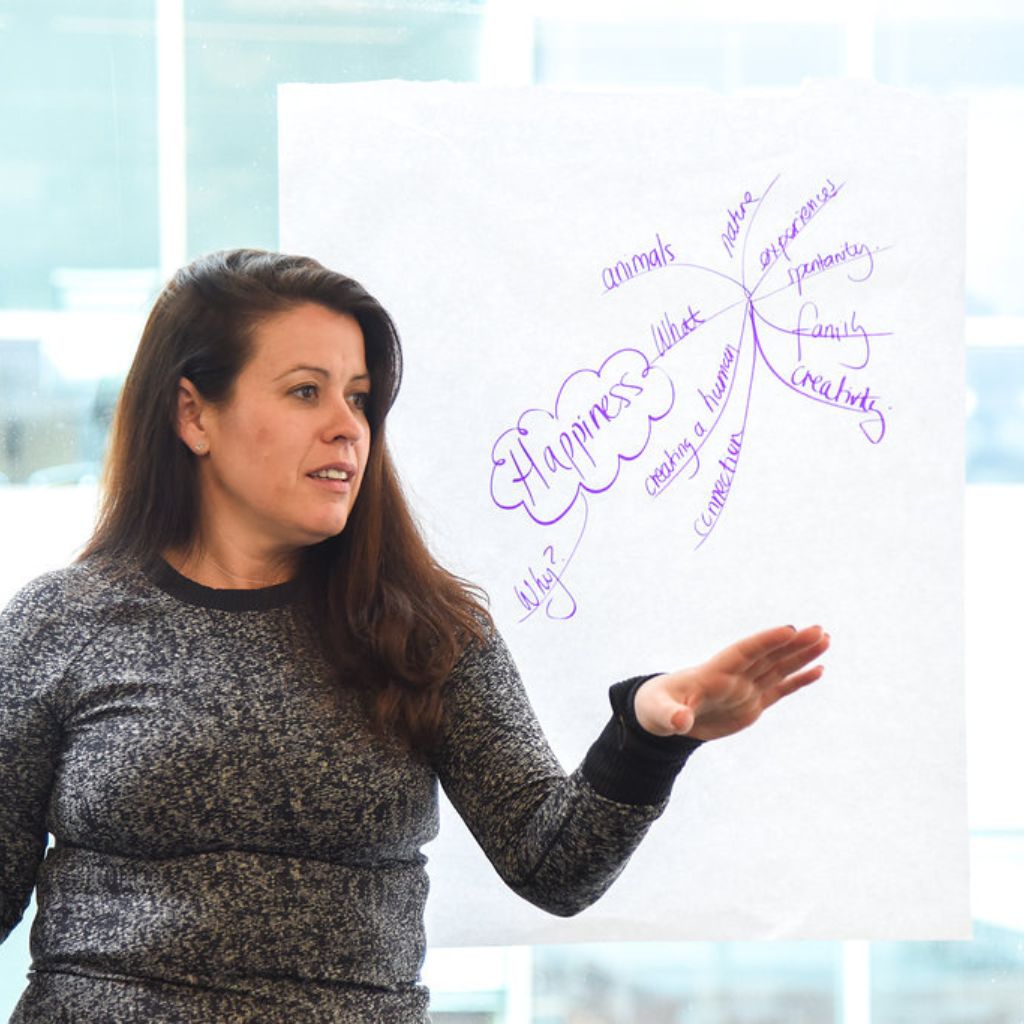
Inviting back analogue practices matters too. Starting deep work with a blank page and a pen, mind-mapping insights before opening an AI tool, writing long form before asking AI to refine it, these are the practices that keep us as the authors of our own thinking (Haynes & Ackermann, 2026). I write every newsletter in my journal first. I work through every complex problem on paper before I go to AI. This article began the same way.
The shift in how we use AI is equally important. Rather than asking it for answers, we can give it our thinking and ask it to stress-test it. Ask it what you have missed. Ask it why your approach might fail. Ask it how it to break down how arrived at its recommendation. Used this way, AI sharpens judgment rather than replacing it (Haynes & Ackermann, 2026; Buçinca et al., 2021).
Finally, and perhaps most importantly at an organisational level, we need to differentiate between decisions that warrant speed and decisions that warrant wisdom. Operational matters can move quickly. Decisions that carry human, ethical, or cultural consequence require something different, protected space, deliberate pace, and the kind of contextual judgment that no prompt can replicate (Rohilla, 2025).
We cannot afford to wake up and find that, in outsourcing our thinking, we gave away the very judgment that makes us valuable as leaders.
Clarity is a competitive advantage. The organisation that designs its work to protect sound human judgment, that treats cognitive capacity as a leadership resource rather than an individual responsibility, will always out-think the one that is simply in motion.
The question worth considering in this moment is this: are you using AI to think more deeply, or are you using it to think less?
That single distinction may be the most important leadership design choice of this decade.
Ps. If you've noticed a downgrade in your brain power since using AI and you're ready to change your relationship with it to one that actually creates space for what matters without offloading your cognition, the Purpose Project is for leaders like you. You can find out more and secure your spot in the next cohort here.
References
Buçinca, Z., Malaya, M. B., & Gajos, K. Z. (2021). To trust or to think: Cognitive forcing functions can reduce overreliance on AI in AI-assisted decision-making.Proceedings of the ACM on Human-Computer Interaction, 5(CSCW1), 1–21.https://doi.org/10.1145/3449287
Gerlich, M. (2025). AI tools in society: Impacts on cognitive offloading and the future of critical thinking.Societies, 15(6).https://doi.org/10.3390/soc15010006
Haynes, A., & Ackermann, B. (2026).Think again: Memory in the AI age.Korn Ferry Institute.
Ocklenburg, S. (2026, February 15). Cognitive offloading: Using AI reduces new skill formation.Psychology Today.
Rohilla, A. (2025). Impact of excessive AI tool usage on the cognitive abilities of undergraduate students: A mixed method study.Advance Social Science Archive Journal, 4(1), 2131–2143.https://doi.org/10.55966/assaj.2025.4.1.0115